Select Language
Indian
Asian
European
Middle Eastern & African
Americas & Others
Logo
Industrial centrifugal pump manufacturer

Centrifugal Pumps for Reliable Process Flow

Sando Rotary manufactures centrifugal pumps for clean water, chemical process, effluent transfer, thermic fluid, slurry, self-priming and multistage duties. Our team supports model selection around flow, head, NPSH, material compatibility and sealing requirements.

Pump range

Centrifugal pump types for process industries

Choose from standard process pumps, self-priming pumps, multistage pumps and high-temperature designs built around your liquid, installation and operating cycle.

CPChemical

Chemical Process Pumps

For acids, alkalis, solvents, process water and corrosive transfer where MOC and seal selection decide service life.

Typical useProcess transfer
MOCSS304 / SS316 / alloys
SealMechanical / double
SPSelf priming

Self-Priming Pumps

Useful for transfer points with suction lift, intermittent operation, tank unloading and dewatering where priming reliability matters.

Typical useTransfer / drainage
Suction liftDuty dependent
ServiceWater / chemical
MSHigh head

Multistage Pumps

Selected for boiler feed, pressure boosting, RO systems and high-head transfer where efficiency and stable performance are important.

Typical usePressure boosting
DutyHigh head
OperationContinuous
TFThermic fluid

Thermic Fluid Pumps

Designed for heat transfer oil circulation, heating systems and high-temperature process loops with suitable bearing and seal arrangements.

Typical useHot oil circulation
TemperatureService dependent
MOCCS / SS options
SLAbrasive

Slurry Pumps

Configured for abrasive or solids-bearing liquids after reviewing particle size, concentration, velocity and wear allowance.

Typical useSlurry / effluent
ReviewSolids and wear
BuildHeavy duty
APIProcess

API / ISO Duty Pumps

For refinery, petrochemical and continuous process applications where standards, documentation and reliability requirements are higher.

Typical useOil and process
ReviewAPI / ISO needs
SupportDocumentation
Selection workflow

Engineered around your operating point

A centrifugal pump works best when the pump curve, system resistance and liquid properties are reviewed together. Sando Rotary helps narrow the model before quotation.

Confirm duty point

Flow rate, total head, suction condition, static lift, friction losses and available NPSH.

Review liquid data

Liquid name, temperature, viscosity, specific gravity, pH, vapor pressure and solids content.

Select construction

Pump type, material of construction, impeller, seal plan, motor rating and coupling arrangement.

Finalize support

Dimensional data, quotation, installation guidance, spares and after-sales support.

Technical data

Centrifugal pump model sizes

Use this table as an initial model-size reference. Final selection should be based on the pump curve, liquid properties and site conditions.

Performance curve table

Reference curves for preliminary pump selection. Confirm final duty point with Sando Rotary before ordering.

Sando Rotary centrifugal pump performance curve table for flow and head selection

50Hz range (2880 RPM and 1440 RPM)

Use this 50Hz performance curve to compare model performance across the operating range before detailed sizing.

Sando Rotary centrifugal pump performance curve table with model selection ranges

60Hz range (3500 RPM and 1750 RPM)

Use this 60Hz performance curve to review the applicable model range, then share flow, head and liquid data for final confirmation.

SD centrifugal pump sizes

SUC/DEL values are in mm. RPM options vary by model and duty point.

Model / Size Suction / Delivery RPM
SD 25/1625 / 162900
SD 32/1332 / 131450 / 2900
SD 32/1632 / 161450 / 2900
SD 32/2032 / 201450 / 2900
SD 32/2632 / 261450 / 2900
SD 40/1340 / 131450 / 2900
SD 40/1640 / 162900
SD 40/2040 / 201450 / 2900
SD 40/2640 / 261450 / 2900
SD 50/1350 / 131450 / 2900
SD 50/1650 / 161450 / 2900
SD 50/2050 / 201450 / 2900
SD 50/2650 / 261450 / 2900
SD 50/3250 / 321450 / 2900
SD 65/1365 / 131450 / 2900
SD 65/1665 / 161450 / 2900
SD 65/2065 / 201450 / 2900
SD 65/2665 / 261450 / 2900
SD 65/3265 / 321450 / 2900
SD 80/1680 / 161450 / 2900
SD 80/2080 / 201450 / 2900
SD 80/3280 / 321450 / 2900
SD 80/4080 / 401450 / 2900
SD 100/20100 / 201450 / 2900
SD 100/26100 / 261450 / 2900
SD 100/32100 / 321450 / 2900
SD 125/26125 / 26970 / 1450
SD 125/32125 / 32970 / 1450
SD 125/40125 / 40970 / 1450
SD 150/26150 / 261450
SD 150/32150 / 32970 / 1450
SD 150/40150 / 40970 / 1450

Common MOC options

Final MOC depends on fluid compatibility and duty conditions.

Material Typical applications Corrosion behavior
CIWater, cooling, utility and non-aggressive liquidsModerate
CS / MSOil, hydrocarbon, hot water and general industrial dutiesLow without coating
SS304Food, beverage, mild chemicals and process waterHigh
SS316 / SS316LCorrosive chemicals, acids, pharma and marine environmentsExcellent for many services
CI / CS with SS internalsIndustrial duty with stainless wetted or wear componentsGood for selected duties
Sealing options

Control leakage and maintenance risk

The right sealing arrangement depends on liquid hazard, temperature, solids, crystallization tendency and maintenance preference.

1

Mechanical seals

Single or double mechanical seals with suitable face and elastomer combinations for common industrial process duties.

2

Gland packing

A practical option for many water and non-hazardous services where controlled leakage and simple maintenance are acceptable.

3

Magnetic drive

Considered where zero external leakage is important for hazardous, toxic, high-value or odor-sensitive liquids.

Available models

Explore Sando Rotary centrifugal pumps

Browse listed models and share your application details for exact sizing, performance confirmation and quotation support.

Chemical Process Pumps centrifugal pump by Sando Rotary

Chemical Process Pumps

Chemical Process Pumps are corrosion-resistant centrifugal pumps designed for safe and efficient handling of aggressive, toxic, or acidic chemicals in industrial applications.

View specifications
PPC Thermic Fluid Pumps centrifugal pump by Sando Rotary

PPC Thermic Fluid Pumps

PPC Thermic Fluid Pumps are specially designed for high-temperature heat transfer applications using thermic fluids, offering leak-proof and reliable operation without external cooling.

View specifications
CWP Water Pumps centrifugal pump by Sando Rotary

CWP Water Pumps

CWP Water Pumps are high-performance, single-stage centrifugal pumps used for reliable water transfer in domestic, agricultural, and industrial applications.

View specifications
NCS Slurry Pumps centrifugal pump by Sando Rotary

NCS Slurry Pumps

NCS Slurry Pumps are heavy-duty centrifugal pumps designed for handling abrasive slurries, thick liquids, and solid-laden fluids in tough industrial environments.

View specifications
Self-Priming Pumps centrifugal pump by Sando Rotary

Self-Priming Pumps

CSP Self-Priming Pumps are designed to handle water, slurry, and light chemicals with the ability to prime automatically without foot valves, ideal for quick and easy startup.

View specifications
Mixed Flow Pump centrifugal pump by Sando Rotary

Mixed Flow Pump

High-capacity mixed flow pumps designed for efficient handling of large volumes of water at medium heads in irrigation, drainage, power plants, and industrial applications.

View specifications
Magnetic Drive Pump centrifugal pump by Sando Rotary

Magnetic Drive Pump

High-performance Magnetic Drive Pumps (metallic and non-metallic) designed for leak-free, corrosion-resistant, and maintenance-free fluid handling in chemical, pharmaceutical, and industrial applications.

View specifications
Slurry Pump centrifugal pump by Sando Rotary

Slurry Pump

Heavy-duty Slurry Pumps designed for handling abrasive, viscous, and solid-laden fluids in harsh industrial and mining environments. Built for durability, performance, and long service life.

View specifications
Monoblock Pump centrifugal pump by Sando Rotary

Monoblock Pump

Monoblock pumps are compact and efficient centrifugal pumps where the pump and motor are mounted on a single shaft, forming a single integrated unit. This design eliminates alignment issues, reduces maintenance, and ensures reliable performance for various water transfer and industrial applications.

View specifications
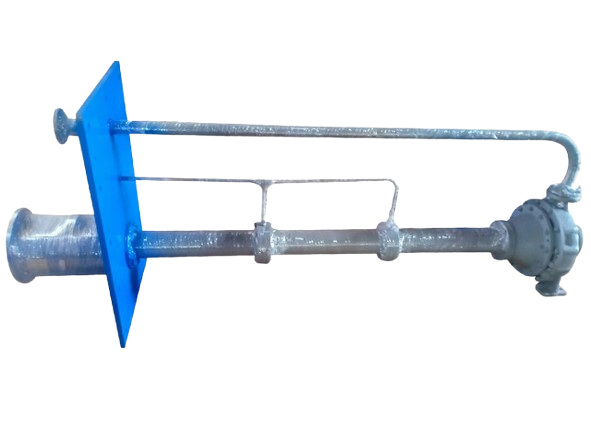
Vertical Extended Shaft Pump centrifugal pump by Sando Rotary

Vertical Extended Shaft Pump

A Vertical Extended Shaft Pump is designed for applications where the pump motor must remain above the liquid level while the impeller operates deep inside tanks, pits, or underground reservoirs. The extended shaft connects the motor to the submerged impeller, allowing efficient liquid transfer from deep sources while protecting the motor from corrosive or hazardous fluids.

View specifications
Applications

Where centrifugal pumps are commonly used

Centrifugal pumps are usually preferred for continuous movement of low to moderate viscosity liquids at stable duty points.

Chemical plants

Acid, alkali, solvent, dosing tank transfer, process circulation and utility services.

Water and wastewater

ETP, STP, process water, cooling water, filter feed, transfer and recirculation duties.

Food and pharma

Clean liquid transfer, CIP circulation, process water and selected hygienic duties with compatible MOC.

Oil and petrochemical

Hydrocarbon transfer, refinery utilities and API or process-duty pump requirements.

Textile and dyes

Dye liquor, chemical preparation, finishing, bleaching, process water and effluent transfer.

Mining and minerals

Slurry, process water, abrasive transfer and wash-down duties after solids review.

Pump comparison

Centrifugal pump vs AODD pump

Both pump types are useful in industrial plants, but they solve different problems. The right choice depends on flow pattern, liquid behavior, priming needs, safety requirements and available utilities.

Centrifugal vs AODD selection table

Use this as a practical shortlist guide. Final selection depends on exact process data.

Selection point Centrifugal pump AODD pump
Flow pattern Best for continuous, steady flow at a fixed duty point. Good for transfer, batching and variable operating conditions.
Liquid viscosity Works best with clean, low to moderate viscosity liquids. Handles higher viscosity and changing viscosity more comfortably.
Self-priming Standard designs usually need flooded suction or priming. Naturally self-priming and suitable for suction-lift duties.
Dry run behavior Dry running can damage seals and rotating parts. Can tolerate dry running better, depending on construction.
Solids and slurry Needs selected slurry design and solids review. Often suitable for solids-bearing and abrasive fluids with correct materials.
Leakage control Uses mechanical seal, gland packing or magnetic drive options. Sealless diaphragm design reduces rotating seal leakage risk.
Energy and utilities Efficient for high-flow continuous operation with electric motor drive. Uses compressed air, which can be convenient but often costs more to run.
Typical applications Water transfer, cooling, process circulation, thermic fluid, high-flow transfer. Chemical unloading, effluent, paint, viscous liquids, hazardous-area transfer.
FAQ

Centrifugal pump questions

Short answers to common selection questions from maintenance, purchase and project teams.

How do I choose the right centrifugal pump?

Start with flow rate, total head, suction condition, NPSH available, liquid name, viscosity, specific gravity, temperature, solids, corrosion risk and operating hours. Sando Rotary reviews these details to recommend a suitable model, material and seal arrangement.

When should I use a centrifugal pump instead of an AODD pump?

Use a centrifugal pump for steady continuous flow of clean or moderately loaded low-viscosity liquids. Consider an AODD pump for strong self-priming needs, dry-run tolerance, variable viscosity, compressed-air operation or difficult solids-bearing fluids.

Which material is best for chemical process pumps?

The best material depends on chemical name, concentration, temperature, chlorides, abrasion and pH. SS316 or SS316L is common for many corrosive services, but some liquids may need PP, PVDF, alloy, lined construction or another pump type.

Why is NPSH important in centrifugal pump selection?

NPSH margin helps prevent cavitation, vibration, noise and impeller damage. The site NPSH available should be higher than the pump NPSH required at the selected duty point.

What details should I send for a quotation?

Send flow, head, liquid, temperature, viscosity, specific gravity, pH or concentration, solids size, suction condition, pipe size, installation type, motor supply, preferred MOC and seal requirements.

Can centrifugal pumps handle slurry?

Yes, but only when the design is selected for the slurry. Particle size, solids concentration, abrasion, velocity, impeller design and wear allowance must be reviewed before choosing a centrifugal slurry pump.

What is the difference between 50Hz and 60Hz performance curves?

50Hz pumps commonly run near 2880 RPM or 1440 RPM, while 60Hz pumps commonly run near 3500 RPM or 1750 RPM. The higher speed changes flow, head and power, so the correct frequency curve should be used for selection.

Are centrifugal pumps self-priming?

Standard centrifugal pumps are usually not self-priming and need flooded suction or a priming arrangement. Self-priming centrifugal pumps are available for tank unloading, dewatering and suction-lift transfer duties.

Which pump is better: centrifugal or AODD?

Neither is better for every duty. Centrifugal pumps are strong for efficient continuous flow, while AODD pumps are preferred for self-priming, dry-run tolerance, variable viscosity, solids and many difficult chemical transfer applications.

Why does a centrifugal pump lose performance?

Common causes include wrong rotation, air in suction, cavitation, worn impeller, blocked strainer, incorrect pipe sizing, high viscosity, excessive system head or operating far away from the best efficiency point.

Can one centrifugal pump model work for every liquid?

No. The model, material, impeller and seal must match the liquid properties. A pump suitable for water may fail quickly in corrosive chemicals, abrasive slurry or high-temperature thermic fluid service.

Need help selecting a centrifugal pump?

Share your flow, head and liquid details with Sando Rotary engineers for pump sizing, MOC guidance and quotation support.

Send Enquiry