
Electric Operated Double Diaphragm Pumps
Sando Rotary EODD pumps are designed for energy-efficient, controlled and reliable transfer of chemicals, viscous liquids, wastewater, food-grade fluids and process liquids. Built for industries that need diaphragm pump reliability with electric-drive efficiency.

Electric diaphragm pump technology for controlled process transfer
EODD pumps combine the sealless, positive-displacement benefits of double diaphragm pumping with an electric drive. They are a strong choice for repetitive transfer, batching, recirculation and process lines where compressed air cost, flow consistency and automation matter.
- ✓ Useful for acids, alkalis, solvents, viscous liquids, wastewater, paints, resins and other compatible process fluids.
- ✓ Supports controlled flow for batching, dosing support, unloading, tank transfer and circulation duties.
- ✓ Reduces dependency on plant compressed air where electric utilities are preferred for operating cost control.
- ✓ Can be selected with suitable wetted materials after checking fluid compatibility, temperature and duty cycle.
EODD pump range available from 1/2 inch to 3 inch
Sando Rotary helps select the right electric operated diaphragm pump size and material of construction according to LPM, pressure, chemical compatibility, viscosity and installation conditions.
Available size range
1/2" to 3"Pump size is selected from the required LPM, total discharge pressure, suction condition, pipe size, viscosity, duty cycle and whether the pump will run continuously or intermittently.
Available MOC options
Material of construction is selected by checking the pumped liquid, concentration, temperature, abrasion risk and hygiene or conductivity requirement.
How an EODD pump works
An Electric Operated Double Diaphragm pump is a positive-displacement pump. The electric motor drives a mechanical system that reciprocates two diaphragms. As the diaphragms change chamber volume, inlet and outlet check valves control the liquid direction.
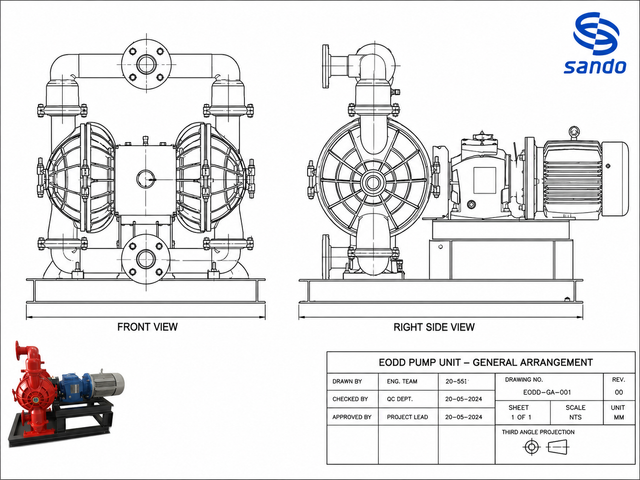
Motor converts rotation into diaphragm movement
The electric motor, usually through a gearbox and crank or eccentric mechanism, converts rotary motion into back-and-forth diaphragm movement.
Suction stroke fills the chamber
When one diaphragm retracts, chamber volume increases and pressure drops. The inlet check valve opens, the outlet valve closes and liquid enters the pump chamber.
Discharge stroke pushes liquid out
When the diaphragm moves forward, chamber volume reduces and pressure rises. The inlet valve closes, the outlet check valve opens and liquid is forced into the discharge line.
Two chambers alternate for transfer
While one chamber is filling, the other chamber is discharging. This alternating action creates controlled positive-displacement transfer without a mechanical seal in contact with the liquid.
LPM depends on speed and system conditions
Actual flow depends on pump size, diaphragm displacement, motor speed, liquid viscosity, suction condition, discharge pressure and piping losses.
Where electric diaphragm pumps are recommended
The best pump is selected from duty data, not only the liquid name. Share flow, pressure, viscosity, temperature and chemical concentration for an accurate recommendation.
Chemical Transfer
For controlled movement of corrosive or aggressive liquids with compatible wetted parts and diaphragm materials.
Batching and Metered Transfer
Suitable when production needs repeatable transfer rates and easier integration with electrical control systems.
Process and Utility Lines
Used for tank-to-tank transfer, recirculation, unloading, wastewater handling and plant utility movement.
EODD pump selection guide for buyers and engineers
Select an EODD pump when the process needs controlled diaphragm-pump transfer with electric-drive efficiency, suitable wetted materials and dependable flow for the required duty.
Choose EODD when you need
- Lower compressed-air usage in frequent transfer duties.
- Electric motor control for repeatable flow and automation.
- Sealless diaphragm pumping for leakage-sensitive liquids.
- Controlled transfer of viscous or chemically sensitive fluids.
Check before final selection
- Flow rate, total dynamic head and required discharge pressure.
- Fluid viscosity, solids content, vapor pressure and temperature.
- Wetted-part compatibility with concentration and cleaning media.
- Area classification, duty cycle, motor control and installation space.
EODD vs AODD vs centrifugal pump
Use this quick comparison to understand where an electric operated double diaphragm pump is the right recommendation.
| Parameter | EODD Pump | AODD Pump | Centrifugal Pump |
|---|---|---|---|
| Drive method | Electric drive moves the diaphragms. | Compressed air drives the diaphragms. | Electric motor rotates an impeller. |
| Best use | Controlled transfer, batching, recirculation and frequent process duty. | Portable transfer, hazardous-area duties and plants with available compressed air. | Continuous high-flow transfer of clean or low-viscosity liquids. |
| Energy profile | Lower compressed-air dependency and efficient for repeated electric-drive operation. | Depends on compressed air availability and air system efficiency. | Efficient for clean fluids at stable duty points. |
| Flow control | Good control through pump sizing, motor speed and control system integration. | Controlled by air pressure and air volume. | Controlled by valve throttling, VFD or impeller selection. |
| Fluid handling | Suitable for compatible chemicals, viscous fluids and process liquids. | Strong for chemicals, slurry, viscous liquids and intermittent duties. | Best for clean to moderately loaded low-viscosity liquids. |
| Available Sando range | 1/2 inch to 3 inch; MOC in PP, PVDF, SS316, SS316L, Aluminum, Conductive PP, Conductive PVDF and Super Duplex. | Selected by air duty, size, MOC and application requirement. | Selected by flow, head, impeller, seal and MOC requirement. |
| Recommendation | Choose when electric control, energy saving and diaphragm pump reliability are required. | Choose when air operation, portability or air-safe operation is preferred. | Choose when clean-liquid continuous flow is the main requirement. |
Explore Sando Rotary EODD Pump
Our EODD pump range offers multiple sizes, MOC options, and configurations to meet varied requirements in chemical transfer, process handling, batching, dosing, wastewater, pharma, and food applications.

Electric operated diaphragm pump questions
What is an EODD pump?
An EODD pump is an electric operated double diaphragm pump. It uses an electric drive to move diaphragms and transfer liquid with a sealless positive-displacement pumping action.
What is the working principle of an EODD pump?
The working principle is positive displacement. An electric motor drives a crank, eccentric or similar mechanism that moves two diaphragms back and forth. During the suction stroke, chamber volume increases and liquid enters through the inlet check valve. During the discharge stroke, chamber volume decreases and liquid exits through the outlet check valve. The check valves prevent reverse flow.
Is EODD better than AODD?
EODD is often better for energy efficiency, electric control and frequent transfer. AODD can be better where compressed air operation, portability or specific hazardous-duty needs are required.
Can EODD pumps handle chemicals?
Yes, when the body, balls, seats and diaphragm materials are compatible with the chemical concentration, temperature and cleaning process.
How can I get the right EODD pump recommendation?
Send the liquid name, concentration, flow rate, discharge pressure, suction condition, viscosity, temperature and operating hours. Sando Rotary can recommend the suitable pump configuration.
How to choose the right EODD pump manufacturer in India?
A good EODD pump manufacturer in India should provide application study, correct pump sizing, MOC selection, diaphragm and valve material guidance, documentation, after-sales support and industry experience. Sando Rotary Equipments PVT LTD supports EODD pump selection for chemical, pharmaceutical, food, wastewater and process industries.
What are the advantages of an EODD pump?
EODD pumps reduce compressed-air dependency, support energy-efficient operation, provide controlled flow, use a sealless diaphragm design and can handle many compatible chemicals, viscous liquids and process fluids.
How is EODD pump selection done?
EODD pump selection is based on required LPM, discharge pressure, suction lift, pipe size, fluid viscosity, temperature, solids content, duty cycle, operating hours and chemical compatibility of wetted parts.
What EODD pump size should I choose?
Sando Rotary EODD pumps are available from 1/2 inch to 3 inch. Pump size is chosen from the required flow rate in LPM, system pressure loss, suction condition, piping length, viscosity and whether the pump will run continuously, intermittently or for batching.
What MOC is available for EODD pumps?
MOC means material of construction. Available EODD pump MOC options include PP, PVDF, SS316, SS316L, Aluminum, Conductive PP, Conductive PVDF and Super Duplex. The correct MOC depends on corrosion resistance, temperature, abrasion, conductivity and process hygiene requirements.
How many LPM can an EODD pump deliver?
The LPM capacity depends on model size, motor speed, liquid viscosity, suction condition, discharge pressure and piping losses. For accurate selection, share your required LPM with fluid and installation details.
Need an EODD pump recommendation?
Share your process details and Sando Rotary will help shortlist the correct electric diaphragm pump, wetted materials and operating configuration for your duty.